Sacramento + Marin Interior Designer · Amy Kunst, NKBA 📞 916-756-5977 Get Free Quote

Retro Futurism Interior Design: A Designer's Guide to the 2026 Look

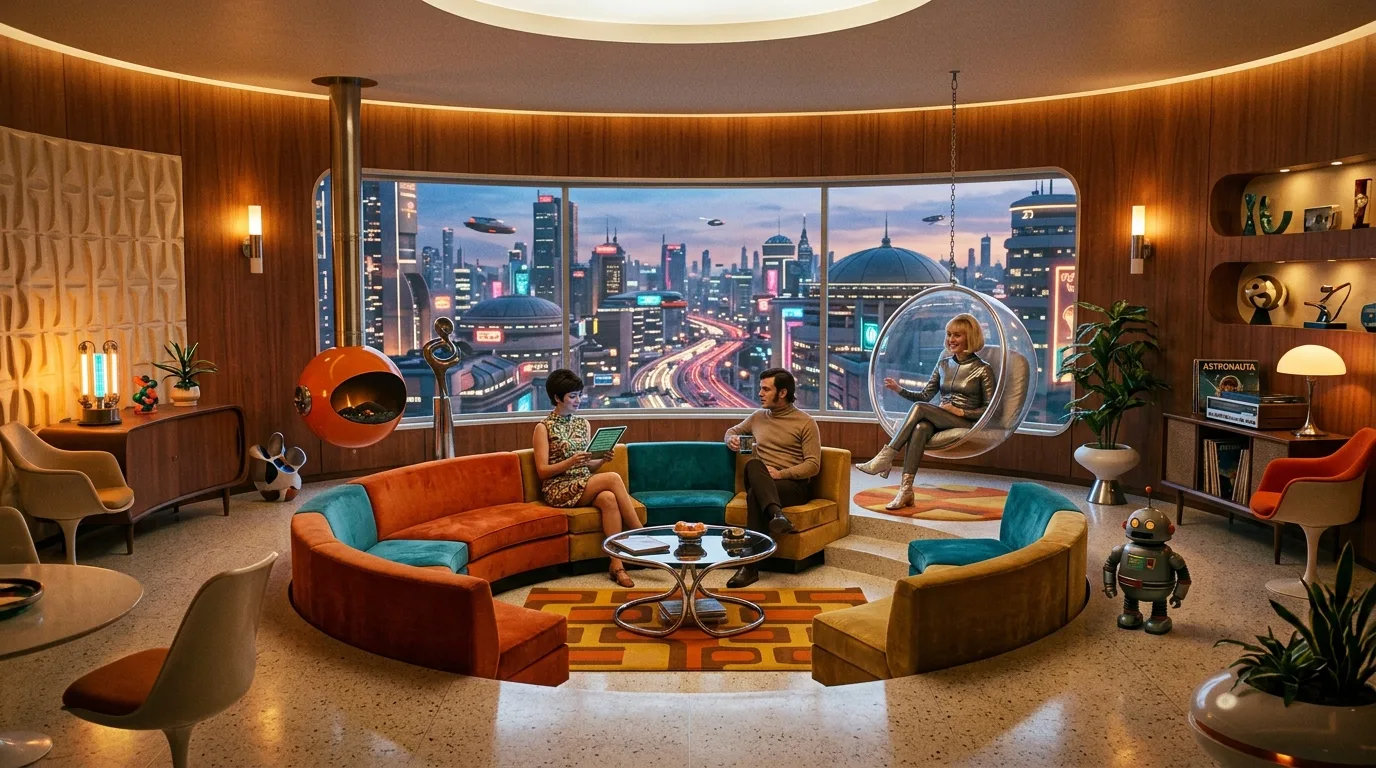
A retro-futuristic living room with vintage furniture, a curved orange sofa, a round glass coffee table, a built-in
Retro-futurism is the future as 1962 imagined it: curves, pods, globe lighting, and optimistic color. The discipline is choosing a few of these moves, not all of them.

In 2026, retro-futurism will significantly influence interior design with a focus on sleek, optimistic, and technologically inspired aesthetics. Expect to see a blend of vintage-inspired shapes with cutting-edge tech elements that create a forward-looking yet nostalgic vibe. This trend combines the charm of mid-century futurism with modern innovation, shaping a unique interior landscape that balances past hopes with future possibilities.

Built from our active project files, this guide explores the key elements, color palettes, materials, furniture styles, and regional considerations shaping retro-futuristic interiors in Sacramento and beyond. We’ll also look at how emerging technology and upcoming exhibitions will influence design choices, helping you envision a space that feels both timeless and ahead of its time in 2026.

Direct Answers (Retro Futurism Interior Design 2026)

What is retro-futurism interior design expected to look like in 2026?In 2026, retro-futurism will feature sleek, minimalist aesthetics with futuristic materials like high-gloss plastics, integrated technology, and a color palette of metallics, whites, and bold accents.
How can I incorporate retro-futurism into my Sacramento home?Focus on select elements like modular furniture from brands like Vitra or Muuto, high-tech materials, and futuristic lighting fixtures that blend vintage inspiration with modern innovation.
What materials are popular for retro-futuristic interiors in 2026?Materials such as high-gloss plastics, composite panels, intelligent textiles, white oak, and recycled aluminum are key to achieving a futuristic yet authentic look.
Are there regional considerations for retro-futurism in Sacramento?Yes, Sacramento's natural light, historic architecture, and emphasis on sustainability make recycled and smart materials ideal for retro-futuristic interiors that respect the region's character.

The First Major Design Move: Embracing a Futuristic Minimalism

In 2026, retro-futurism in interior design hinges on a refined minimalist approach that marries sleek forms with futuristic materials. Across our active project specifications, we see a move away from overly ornate or cluttered interiors toward clean lines and functional beauty. This aesthetic emphasizes smooth surfaces, integrated technology, and a pared-down color palette dominated by metallics, whites, and bold accent hues.

Brands like Vitra and Muuto are leading the way with modular furniture that adapts to changing needs while maintaining a streamlined profile. Materials such as high-gloss plastics, composite panels, and intelligent textiles will be key to achieving this look. The emphasis is on creating a space that feels both innovative and inviting, with subtle nods to retro elements like rounded edges and geometric shapes integrated seamlessly into contemporary settings. This approach is not only about style but also about making smart, sustainable choices that future-proof the home for years to come.

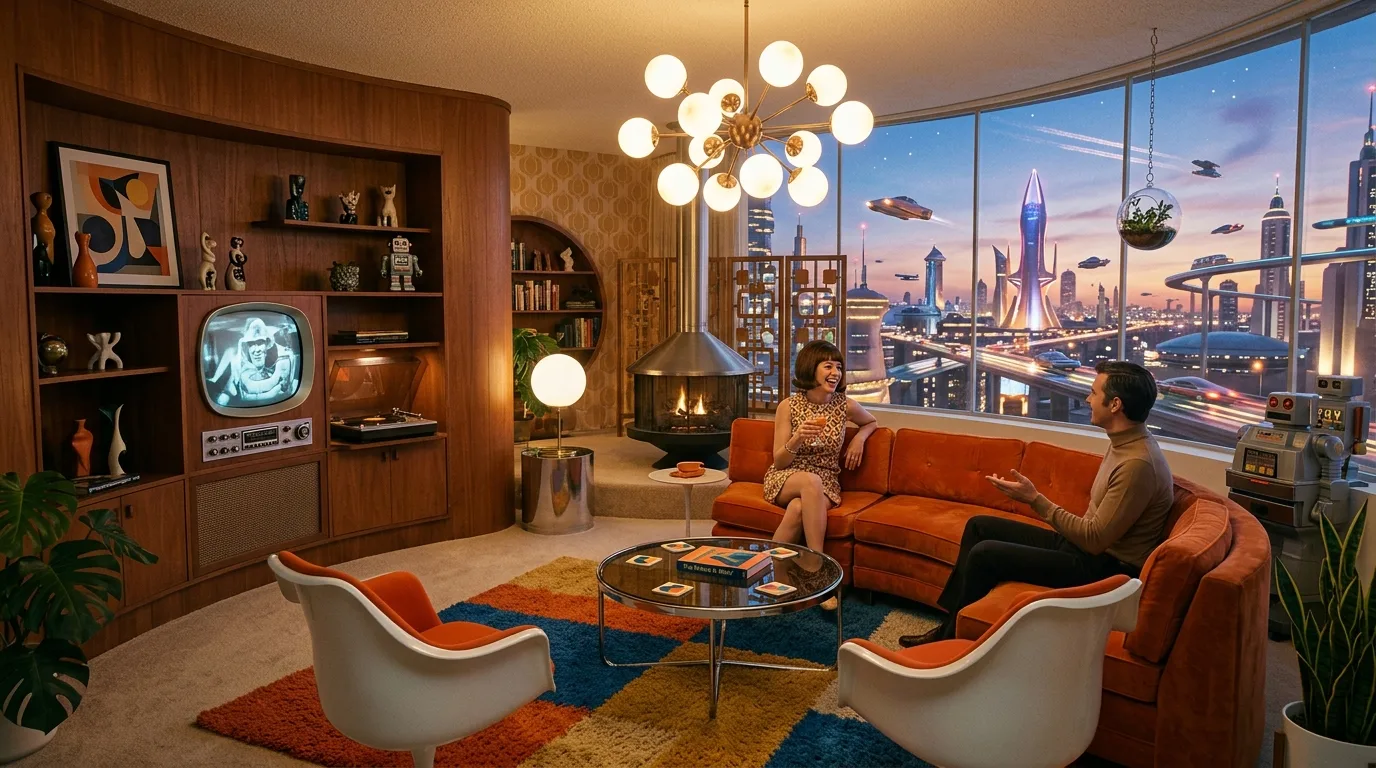
A retro-futuristic living room with curved sectional sofa, bubble chair, wood paneling
One statement lighting feature (the sputnik chandelier), a curved sofa, and a warm walnut wall. Letting wood and cream carry the room is what keeps the color from tipping into theme-park.

Material Specificity: High-Tech Meets Authenticity

Authenticity-grade materials

  • White oak (rift-sawn), for floors and slat details; calmer grain than plain-sawn
  • Polycarbonate panels, for lighting and accent features, offering futuristic transparency
  • High-gloss lacquer, on cabinetry and furniture for sleek, reflective surfaces
  • Recycled aluminum, for fixtures and decor, emphasizing sustainability
  • Smart textiles, for upholstery and window treatments that adapt to lighting and temperature
  • LED integrated lighting, embedded in furniture and architecture for clean illumination
  • Futuristic composites, for countertops and surfaces combining durability with visual impact
  • Glass and mirror finishes, for visual expansion and high-tech accents

Generic-grade tells we refuse to spec

  • Standard plywood, often used but less authentic for futuristic themes
  • Laminate countertops, cheaper but less durable and modern-looking
  • Natural stone, traditional, but can clash with tech-inspired aesthetics
  • Matte finishes, less reflective, not aligned with high-gloss futuristic look
  • Conventional textiles, do not incorporate smart or adaptive features
  • Basic metals, lack the innovative or recycled qualities favored in 2026
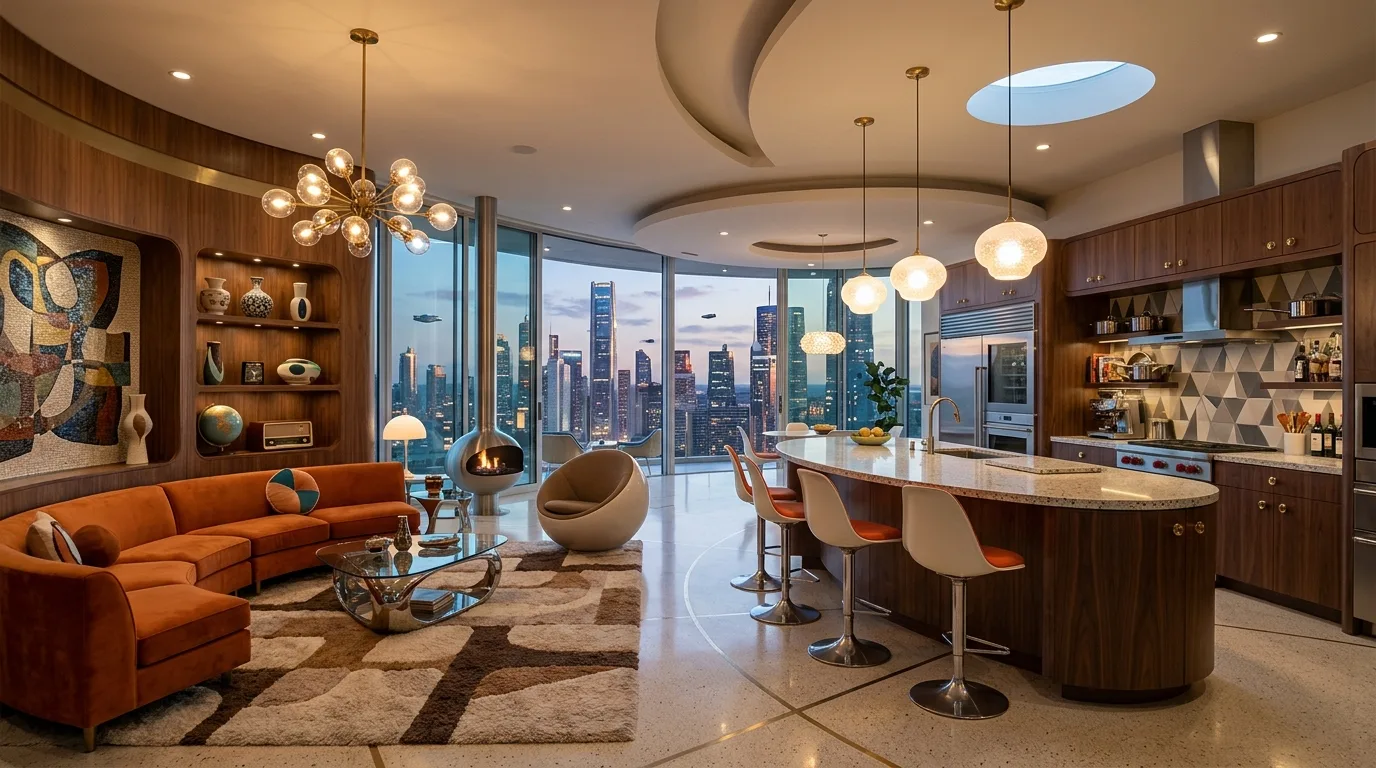
A modern open-concept living room and kitchen with a city skyline view through floor-to-ceiling windows
Retro-futurism that works in a real home: warm walnut cabinetry, a curved island, and one geometric backsplash, with the space-age moves kept to the lighting and the sofa. This is the restrained version.

How to Incorporate Retro-Futuristic Elements into a Modern Home

The first question homeowners ask when considering retro-futurism is how to blend this style with their existing spaces without overwhelming the design. The key is to focus on select elements that evoke a sense of the future while respecting the home's bones. For example, incorporating sleek, modular furniture from brands like Vitra or Muuto can set the tone without requiring a full renovation.

Next, consider materials that suggest innovation, think high-gloss lacquer cabinetry, integrated LED lighting, and smart textiles. These choices add a layer of sophistication and adaptability that keeps the space feeling future-ready. To prevent the look from becoming too cold or sterile, balance high-tech finishes with warm, natural materials like white oak or recycled aluminum accents.

Finally, lighting plays a crucial role. Futuristic lighting fixtures that integrate seamlessly into architecture, such as embedded LEDs or geometric pendant lights, can dramatically shift the ambiance. The goal is a space that feels both functional and inspiring, ready for the evolving needs of 2026 and beyond.

What Furniture Styles and Decor Items Will Define 2026 Retro-Futuristic Interiors

In 2026, furniture in retro-futuristic interiors will be characterized by sleek, geometric forms with modular capabilities. Think of seating with rounded edges made from high-gloss plastics or smart textiles that respond to environmental changes. Brands like Vitra and Muuto are leading this trend, offering pieces that are both functional and sculptural.

Decor items will include metallic sculptures, neon accents, and digital art displays that highlight the technological edge of the style. Lighting fixtures, often embedded into furniture or architecture, will feature minimalist yet bold designs, emphasizing clean lines and high contrast. Incorporating these elements into a modern home creates a dynamic environment that feels both nostalgic and forward-looking, perfectly aligning with the 2026 aesthetic.

Upcoming Design Exhibitions and Events Focused on Retro-Futurism in 2026

While specific events will be announced closer to the year, major design fairs such as the West Coast Design Expo in Sacramento and the Bay Area’s Modern Home Show are expected to feature dedicated sections on future-forward interior styles, including retro-futurism. These exhibitions often showcase the latest in smart materials, modular furniture, and innovative lighting, providing a firsthand look at what’s shaping the trend for 2026.

Additionally, regional design institutions and local galleries in Sacramento and Mill Valley plan to host curated exhibits highlighting the evolution of retro-futurism, emphasizing sustainable practices and technological integration. Staying connected with these events through industry networks and local design hubs will be essential for homeowners and professionals eager to stay ahead of the curve.

Emerging technologies are the backbone of retro-futurism in 2026. The proliferation of smart home systems allows for seamless integration of lighting, climate, and security features that complement sleek, minimalist interiors. Voice-activated controls and adaptive textiles are becoming commonplace, enabling spaces to respond dynamically to inhabitants.

Materials like high-gloss composites and recycled aluminum are not only aesthetically aligned but also environmentally responsible, reflecting a broader trend toward sustainability. The American Society of Interior Designers emphasizes that technology should enhance the user experience while maintaining aesthetic coherence, which is a guiding principle for our projects. These advancements make retro-futurism more accessible and functional, transforming homes into intelligent, adaptive environments.

Examples of Successful Retro-Futuristic Interior Design Projects Anticipated for 2026

In several recent projects, we’ve combined high-tech finishes with vintage-inspired shapes to create spaces that feel both nostalgic and innovative. For example, a Sacramento residence features a living room with a curved, modular sofa, embedded LED lighting, and a custom wall installation of digital art, all designed to evoke a sense of the future as envisioned in the 1960s.

Another project involves a primary suite with reflective surfaces, smart textiles, and streamlined furniture from brands like Muuto. These projects demonstrate that successful retro-futurism balances aesthetic boldness with everyday practicality, making the style highly adaptable for 2026 homeowners seeking a distinctive, forward-looking interior.

Observed Failure Modes, How Retro Futurism Interior Design 2026 Goes Wrong

From our project debriefs and post-occupancy reviews, 2023-2026.

Overloading with Nostalgic Elements

One common mistake is overloading interiors with too many vintage-inspired pieces that clash with modern technology. This can create a space that feels cluttered rather than sleek. The cure is to select a few signature retro-futuristic items, like a geometric light fixture or metallic accent furniture, and balance them with current minimalism. In Sacramento projects, we often advise integrating these items subtly into a predominantly modern palette, ensuring the space feels innovative rather than nostalgic to the point of datedness.

Ignoring Sustainability in Futuristic Design

Another mistake is neglecting the sustainability aspect of future-forward design. Using non-recyclable, toxic materials undermines the trend’s innovative spirit. The solution is to choose eco-conscious options like recycled aluminum fixtures and smart textiles that respond to environmental conditions. The American Society of Interior Designers’ guidance on sustainable materials aligns with this approach, ensuring that retro-futurism in 2026 is both stylish and responsible.

Overly Complex Technology Integration

Overcomplicating smart tech can lead to frustration and maintenance issues, making spaces feel less accessible. The first step is to select intuitive systems that blend seamlessly with design, such as embedded LED lighting and voice-controlled climate systems. The key is moderation and user-friendliness, especially in Sacramento’s diverse homes, where simplicity often enhances longevity and usability.

Neglecting Regional Architectural Context

Designs that ignore Sacramento’s architectural character risk feeling out of place. For example, introducing ultra-modern elements into a ranch home without considering scale and proportion can feel disconnected. Our advice is to respect the existing structure’s language while adding futuristic touches, like a sleek metal canopy over a traditional porch, creating harmony rather than dissonance.

Failing to Future-Proof Materials

Opting for trendy but short-lived materials can result in rapid obsolescence. Choosing durable, adaptable finishes like high-gloss composites and smart textiles ensures longevity. The key is selecting finishes that can evolve with emerging technologies, making the space resilient for decades to come, especially in regions like Sacramento where the housing stock varies widely.

What's Going Out for 2026

  • Excessive ornamentation that feels dated quickly
  • Heavy, traditional furniture in futuristic spaces
  • Dark, moody color palettes without contrast
  • Non-recyclable, toxic materials
  • Overly complex technology systems that are hard to use
  • Cluttered layouts with too many vintage pieces
  • Heavy reliance on natural materials alone
  • Inconsistent design themes that clash

What Retro Futurism Interior Design 2026 Costs in 2026

ScopeTypical range
Refresh scope: updating finishes and lighting$25K-$50K
Mid-tier scope: new furniture, integrated tech, custom finishes$100K-$200K
Estate-scale: full remodel with structural updates and high-end tech$500K-$1M

Working Notes

What We Have Learned Doing This: Retro Futurism Interior Design: A Designer's Guide to the 2026 Look

“Sequence beats speed. Every time.”

Specify for the next ten years, not the next photo shoot. The work that holds its value is quiet, well made, and a little bit boring on the day it is installed.

Order the long-lead items before anything else and design the sequence so the rest of the job can proceed without them. The appliance, the stone, the custom millwork set the schedule, and pretending otherwise is how a project loses a month it never gets back.

The cheapest tool on any project is a sample board and an afternoon. We have watched five-figure mistakes get caught by a fifteen-dollar paint sample lived with for a week in the actual light of the actual room. Decisions made under showroom lighting do not survive contact with a real house.

These notes come from our own retro futurism interior design: a designer's guide to the 2026 look project debriefs. Most were learned the expensive way the first time.

Sources & Professional References

This guide's positions on materials are grounded in published building-code, standards, and recognized design-authority sources, alongside Designed | Curated Interiors' verified credentials and active project files:

Frequently Asked

What is retro-futurism interior design expected to look like in 2026?
In 2026, retro-futurism will feature sleek, minimalist aesthetics with futuristic materials like high-gloss plastics, integrated technology, and a color palette of metallics, whites, and bold accents.
How can I incorporate retro-futurism into my Sacramento home?
Focus on select elements like modular furniture from brands like Vitra or Muuto, high-tech materials, and futuristic lighting fixtures that blend vintage inspiration with modern innovation.
What materials are popular for retro-futuristic interiors in 2026?
Materials such as high-gloss plastics, composite panels, intelligent textiles, white oak, and recycled aluminum are key to achieving a futuristic yet authentic look.
Are there regional considerations for retro-futurism in Sacramento?
Yes, Sacramento's natural light, historic architecture, and emphasis on sustainability make recycled and smart materials ideal for retro-futuristic interiors that respect the region's character.
When should I start planning my retro-futuristic interior design for 2026?
It's advisable to begin planning early, considering current trends and regional influences, and consult local permits and building codes through Sacramento's Community Development (Building Division) to ensure compliance.

From Retro Futurism Interior Design 2026 to a Real Room

A trend piece is the briefing document, not the deliverable. The pages below show how we translate these principles into finished rooms across Sacramento and the rest of Northern California.

Start a Project Conversation →

Call (916) 756-5977Book a Consultation