
Picking ceiling tiles for sound absorption in 2026? It's about matching acoustic performance with design trends. Top choices mix new materials with eye-catching designs. Function meets form. In 2026, sound-absorbing ceiling tiles go green, look sharp, and add smart features.
Our guide is rooted in real projects, diving into Sacramento's specifics, like materials and new trends. We’ll help you understand which ceiling tiles deliver optimal sound absorption, how they fit into contemporary design, and what to expect for costs and installation challenges in 2026.
Common Questions
| What are the best ceiling tiles for sound absorption in 2026? | Top picks? Mineral fiber tiles from Armstrong or USG, with eco-formulas and high-density. Recycled cotton and bio fibers offer green alternatives. |
| How do regional climate and architectural styles in Sacramento influence sound-absorbing ceiling tile choices? | In Sacramento's dry heat, materials must resist warping. Look at flexible, eco-friendly options. They handle historic homes' quirks. |
| What factors should I consider when choosing sound-absorbing ceiling tiles for my space? | Decide: reduce echoes or noise? Consider the room size and height. Look at NRC ratings and how it fits the budget and style. |
| Are there any specific brands or materials recommended for sound absorption in Sacramento? | Armstrong and USG lead with their sound-trapping mineral fibers. Green materials matter most to them. |
Emerging Materials for Superior Sound Absorption
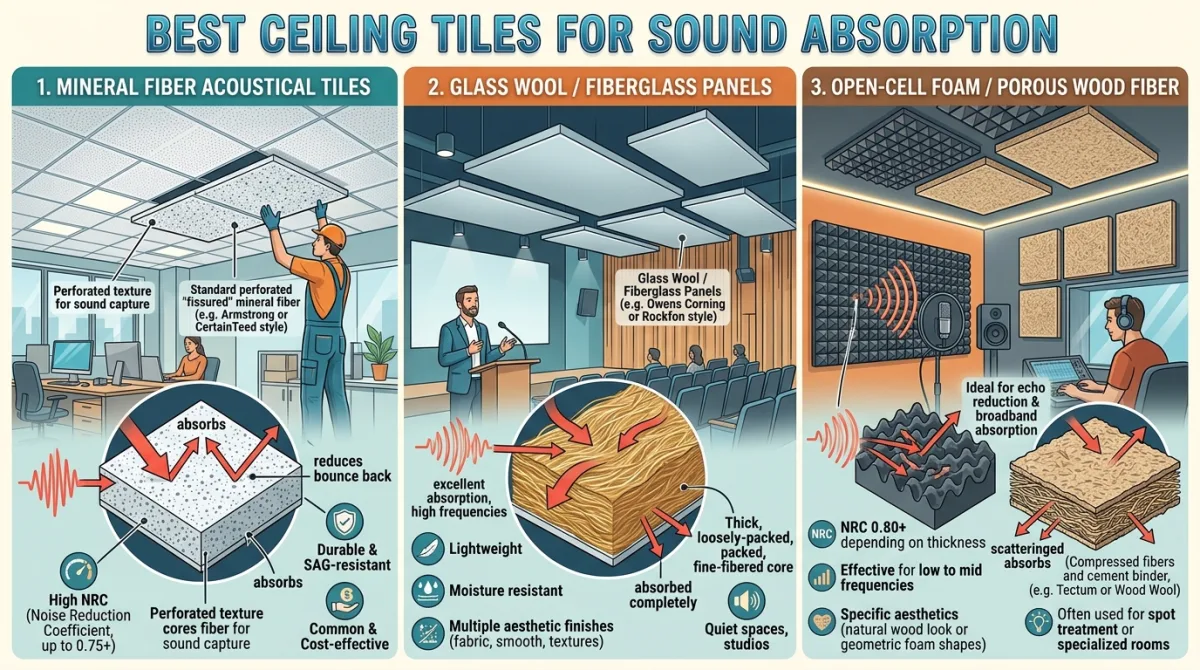
In 2026, the most effective ceiling tiles for sound absorption are crafted from advanced materials that prioritize both performance and sustainability. Mineral fiber sticks around for sound and safety. New blends now use recycled content, becoming efficient and sustainable. Armstrong and USG's latest lines? High-density tiles absorb sound best.
We're into recycled cotton and wood wool for green options. They fit right into modern spaces. These materials now sport textures and patterns, aligning with trends toward softer, warmer visuals. Across projects, these materials hit high NRCs and boost sustainable design.
Material Specificity for Sound Absorption
Authenticity-grade materials
- Recycled mineral fiber, high NRC, fire-safe, and eco-friendly, with improved sound absorption over traditional options
- Wood wool composites, natural, sustainable, with textured surfaces that enhance acoustics and aesthetics
- Bio-based fibers, derived from renewable sources, offering excellent sound absorption and a warm visual appeal
- Recycled cotton panels, soft, natural, with high acoustic ratings, suitable for eco-conscious projects
- Open-cell foam (high-density), advanced formulations now meet fire and health standards, used in hybrid systems
- Flexible, lightweight mineral tiles, easy to install, durable, with customizable textures and colors
Generic-grade tells we refuse to spec
- Standard foam panels, low NRC, poor sustainability, limited aesthetic options
- Non-recycled mineral fiber, outdated, less eco-friendly, lower performance
- Plastic-based composites, less sustainable, may off-gas, and have lower acoustical ratings
- Heavy, rigid tiles, difficult to install, less flexible in design
- Low-grade foam, cheap, short lifespan, poor sound absorption
- Unfinished or plain tiles, minimal aesthetic appeal and limited acoustic performance
How do I choose the right sound-absorbing ceiling tiles for my project?
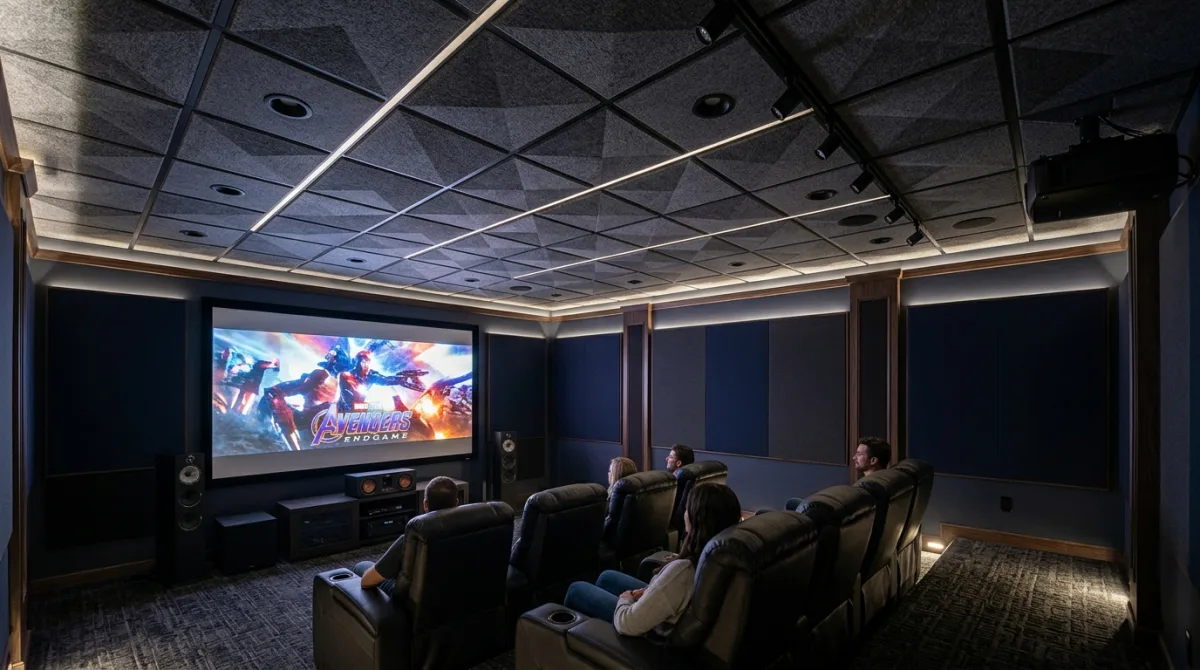
Consider room specifics or budget. Details matter. The first question we ask is what the primary concern is: is it reducing echo in a home theater, minimizing noise transfer between floors, or creating a quieter work environment? Got your goal? Measure the room and note any oddities. You'll need to know this. Big open areas could really use some high NRC tiles. Textured ones. Smaller spaces? Think about acoustic panels in your ceiling grid.
Cost considerations are also key. Mineral fiber tiles with recycled content? These tiles? Eco-friendly, really good acoustics. Pricey, though. Need the best ROI? Look at fabric vs. open-cell mineral. The American Society of Interior Designers emphasizes selecting materials that balance durability, performance, and aesthetics, which remains central in 2026’s choices.
What This Costs in 2026
| Scope | Typical range |
|---|---|
| Basic refresh with standard mineral fiber tiles | $5K-$12K |
| Mid-tier upgrade with textured and customizable tiles | $12K-$25K |
| Full-scale commercial or luxury residential installation with integrated acoustic systems | $25K-$100K |
Working Notes
What We Have Learned Doing This: Best Ceiling Tiles For Sound Absorption: A Designer's Guide to the 2026 Look
“On any bath in a home built before 2010, the demolition scope includes one inspection cut in the wet wall before the new fixtures are ordered.”
Waterproofing is the part nobody sees and the only part that fails expensively. We never let the schedule rush the membrane.
Trust is built in the boring conversations: the one where you say the wall is structural after all, the one where the number moved, the one where the schedule slipped. Clients forgive reality. They do not forgive being surprised by it.
After enough projects you stop fearing bad taste and start fearing the boring things: delays, sequencing mistakes, moisture behind a wall, an electrician improvising, framing that is not where the drawings swear it is. The aesthetic part still matters, it is why anyone hires anyone, but execution decides whether the room ever gets built the way it was drawn.
Most of the money that gets wasted is spent solving the wrong problem confidently. A homeowner asks for more space, every contractor agrees and prices an addition, and the real issue turns out to be light, or proportion, or one bad sightline. We make the room tell us the problem before anyone signs a demolition contract.
These notes come from our own project debriefs. Most were learned the expensive way the first time.
Sources & Professional References
This guide's positions on materials are grounded in published building-code, standards, and recognized design-authority sources, alongside Designed | Curated Interiors' verified credentials and active project files:
- American Society of Interior Designers (ASID): interior-design practice standards
- International Code Council (ICC): Chapter 8 Interior Finishes
- NKBA, Amy Kunst Member Profile (verified credential, NKBA Committee Member)
- Featured in: Homes & Gardens (design expert quote, May 2026) · Sacramento Love (guest author, 2024)
From Principle to a Real Room
A trend piece is the briefing document, not the deliverable. The pages below show how we translate these principles into finished rooms across Sacramento and the rest of Northern California.
- Sacramento & Bay Area Interior Design Services How we scope, source, and deliver work end to end.
- Interior Designer Hub, Sacramento Where most of our Sacramento work lives, the regional fit explained.
- Modern Tudor Homes: Authentic, Revival, and Neo-Tudor (A Designer Reference) Heritage-architecture renovation patterns from our project files.
- Japandi Living Room: A Designer's Guide to the 2026 Look The 2026 warm-neutral playbook applied to the living room.