San Jose designer fees? Think $175 to $450 hourly in 2026 or thousands more for big jobs. Dollars per hour? Look at the value beyond the rate. It is the total design coverage you are buying, how clearly the scope is defined, and how much expensive uncertainty the designer is absorbing before the contractor, vendor, or client starts changing the math.
I've compiled this guide from my hands-on experience with actual pricing discussions and projects. I will break down consultations, hourly work, flat fees, full-service pricing, project-size differences, common add-ons, Bay Area versus Sacramento pricing, and the fee structures that can look inexpensive until procurement, revisions, and coordination begin.
Direct Answers (How Much Does An Interior Designer Cost In San Jose)
| How much do established residential interior designers charge per hour in San Jose? | Designers in San Jose run $175 to $450+ hourly. Rates depend. |
| What are the typical costs for full-service design projects by interior designers in San Jose? | Room revamps? Count on several grand. Whole-home designs? Get ready for five figures. |
| How do interior designer fees vary based on the scope of work in San Jose? | Total cost rides on project scope and designer prep, not just hourly rates. |
| What factors contribute to higher design costs in San Jose compared to other areas like Sacramento? | San Jose costs spike with labor, tricky old homes, and those posh indoor-outdoor expectations. |
Price the Scope First, Not the Designer's Hourly Rate
The first pricing move in San Jose is simple: separate the visible design fee from the actual workload behind it. A designer charging $200 per hour can cost less overall than someone quoting a lower rate if the higher-rate designer has a tighter scope, faster documentation, fewer revision loops, and a procurement process that prevents expensive substitutions.
Need furnishings or finish ideas? Designers might bill hourly or quote a flat fee. Full-service jobs handle concepts, layouts, finishes, vendors, and more. The difference is substantial because those tasks continue after the pretty presentation is finished.
In Northern California, this matters because the region's older housing stock and strong buyer expectations often create more coordination than a clean new-build floor plan suggests. A 1960s house can need careful decisions around light, circulation, millwork proportions, American white oak flooring, Italian Calacatta limestone, Brazilian mined quartzite, and lighting control before the first purchase order is issued. The ASID chapter resource page on professional standards, licensing, and credentials is useful context for firms defining what professional interior design services actually include. The fee should follow the responsibility, because responsibility is what consumes professional time.
The Specific Work Behind a San Jose Design Fee
Authenticity-grade materials
- Rift-sawn white oak, for flooring and slat details because its quieter grain supports restrained contemporary interiors.
- Natural limestone, for selected floors and fireplace surrounds because tonal variation reads warmer than a repeated printed pattern.
- Honed quartzite, for hardworking stone applications because it gives natural movement while requiring a more deliberate specification than generic engineered surfaces.
- Solid brass hardware, for pieces that are handled daily because the material develops character instead of simply losing a plated finish.
- Wool bouclé, for upholstery because texture can add depth without forcing the room into a louder color palette.
- Mohair or performance wool blend, for premium seating because durability and hand feel can justify the higher specification on heavily used pieces.
- Paint-grade maple, for refined built-ins because stable millwork matters more than an inexpensive face veneer on detailed cabinetry.
- Porcelain slab with a book-matched layout plan, for selected large-format surfaces because seam placement has to be coordinated before fabrication.
- Handmade ceramic tile, for controlled accent areas because variation is part of the finish and must be approved before ordering.
- Low-iron glass, for cleaner modern shower and partition details because reduced green cast matters when surrounding finishes are pale.
Generic-grade tells we refuse to spec
- Unspecified "white oak look" flooring with no cut, wear layer, or finish schedule
- Generic "stone counters" without naming the actual material and fabrication requirements
- Plated hardware described as brass without clarifying the base metal
- Builder-grade flat-pack cabinetry presented as custom millwork
- Random performance fabric with no abrasion, cleaning, or warranty information
- Large-format tile selected without a grout-joint and layout strategy
- One vague lighting allowance covering fixtures, controls, and installation
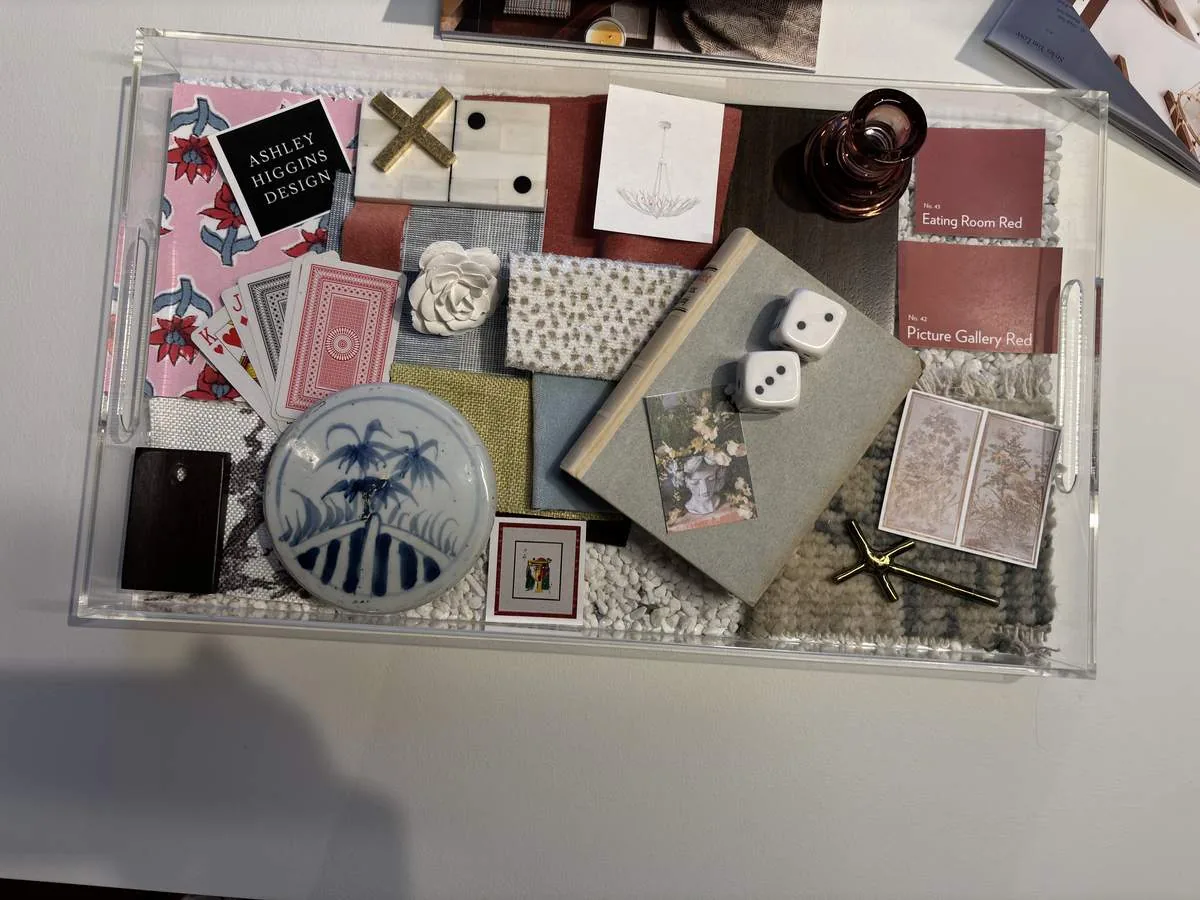
- Mood-board products used as specifications without dimensions or procurement source
Designer Decision Matrix: Which How Much Does An Interior Designer Cost In San Jose Approach Fits Your Home
How we actually decide: match your situation to what we would specify, and the reasoning behind it.
| Your Goal | Best Solution | Why We Recommend It |
|---|---|---|
| Lowest upfront design cost | Paid consultation with a written action plan | This limits professional time to the highest-leverage decisions instead of paying for purchasing and coordination the client can genuinely handle. |
| One furnished room with a clear direction | Fixed-fee room package | A bounded room can be priced cleanly when dimensions, revisions, and deliverables are established before concept work begins. |
| Several rooms with major purchasing | Full-service design with procurement terms | Furniture ordering, freight, damage claims, storage, and delivery create operational work that an hourly mood-board package does not cover. |
| Older Northern California house with many unknowns | Discovery phase before a final full-service fee | Older housing stock can hide structural, electrical, and finish constraints, so early documentation reduces the chance of pricing responsibility before the work is understood. |
| High-end custom millwork and specialty finishes | Senior-led specification phase with detailed trade coordination | Sightlines, reveals, material transitions, and fabrication tolerances become expensive when they are left for the contractor to interpret. |
| Fast-moving supplier pricing | Current allowance schedule plus a real contingency | Northern California material pricing and lead times can change between concept approval and ordering, making stale allowances a poor basis for a fixed project number. |
| Client wants control but needs expert decisions | Hybrid consultation and hourly support agreement | The client keeps selected tasks while reserving professional time for decisions where scale, light, resale expectations, or technical coordination carry more risk. |
Why Interior Designer Costs Run Higher in San Jose
San Jose design pricing is shaped by more than a higher local cost base. Work demands vary with San Jose's housing types and high standards. Simple rooms hide challenges. Light, circulation, and materials test us.
Senior labor and coordination cost more in San Jose than Sacramento. Sacramento can still be expensive when a project involves custom fabrication or premium materials, but a Bay Area firm frequently has more expensive scheduling pressure around trades and longer procurement chains. The U.S. Bureau of Labor Statistics, Industries at a Glance: Construction provides useful context for the larger construction labor environment that design firms operate beside.
Light matters here, too. The Bay Area's intense sun exposure and Mediterranean-like weather patterns reward restrained palettes and honest materials because rooms are exposed to more natural scrutiny than heavily artificial interiors. That can increase specification time, but it also explains why firms spend longer testing undertones, stone samples, sheen levels, and window treatments.
For a broader view of local practice and design priorities, see our San Jose interior designer guide. The right fee is not automatically the lowest Bay Area fee. It is the fee attached to a process that matches the complexity of the responsibility.
What Does an Interior Designer Actually Cost in San Jose?
The homeowner's real underlying question is usually not, "What is the hourly rate?" It is, "How much am I committing before I know whether this service fits my project?" The first question we ask is what the designer will actually be responsible for.
In 2026, San Jose consults might come as separate paid gigs. Designers bill $175 to $450+ per hour. Depends on their experience. A single-room fixed-fee package can fall into the low-to-mid thousands when the scope is tightly bounded. Multi-room and full-service work can move into five figures because procurement, documentation, revisions, vendor coordination, and delivery management require sustained staff time.
The fee should also distinguish design from purchasing. A presentation with finishes and furniture is not the same service as managing quotes, placing orders, checking dimensions, handling freight damage, and coordinating delivery. The ASID professional standards and credentials resources are relevant here because professional interior design work can extend well beyond decoration. Ask for the responsibility map before comparing proposals.
How Pricing Changes From a Consultation to Full-Service Design
A consultation and a full-service engagement should not be priced as smaller and larger versions of the same product. They solve different problems.
- Consultation: Best for targeted direction, because the client usually retains implementation responsibility.
- Hourly support: Best for an evolving scope, because the designer can respond to decisions as they arise without pretending the workload is fixed.
- Flat-fee package: Best for defined deliverables, because both sides know what the fee must cover.
- Full service: Best when purchasing and trade coordination matter, because the designer remains responsible for more moving parts over a longer period.
The cheapest structure is not always the cheapest engagement. Flat fees might push for exclusions. Hourly rates? They rack up if plans change a lot. Clarity in pricing means spelling out what's included, what takes extra time, and who handles buying.
What Hidden Costs Should a San Jose Design Firm Explain Up Front?
The expensive surprises are rarely hidden in the designer's hourly rate. They show up where responsibility was left vague.
Common Mistakes We See
Biggest Waste: Treating purchasing administration as free design work. In San Jose, managing freight and damages often adds extra hours to the workload for these tasks., and a firm that does not price them will either absorb the loss or create conflict later.
Biggest Regret: Comparing proposals by the headline design fee while ignoring revisions and procurement. A lower number can become more expensive when every meeting, sourcing change, and vendor problem sits outside the agreement.
Hidden Cost: Stale allowances. Sacramento supplier pricing on tile and cabinetry has moved fast enough that old numbers should not be carried forward casually, and the same problem affects Bay Area projects when ordering happens months after budgeting.
Other costs can include travel, installation oversight, renderings, receiving, storage, specialty consultants, permit research, and additional drawing packages. If structural changes or permitting enter the scope, firms should separate design responsibility from regulated construction work and use the PBCE Department, San Jose as the authoritative local source for planning, building, and code enforcement requirements.
How Does San Jose Compare With Sacramento and Nearby Bay Area Markets?
San Jose generally sits above Sacramento for comparable senior residential design services, particularly when a project needs frequent coordination with premium vendors and specialized trades. The difference is not universal. A Sacramento studio specifying custom millwork, imported stone, integrated lighting controls, and complex furnishings can price above a simpler San Jose consultation.
For broad practice budgeting, Sacramento often offers a more moderate baseline for hourly labor and defined packages. San Jose and nearby high-cost Bay Area markets tend to support higher senior rates because staffing, overhead, client expectations, and project coordination all cost more. The U.S. Bureau of Labor Statistics Producer Price Index is also useful background for firms watching changing input costs rather than relying on old price sheets.
The practical comparison is scope against scope. Compare a San Jose proposal with another proposal covering the same deliverables, revision limits, procurement responsibility, travel, and construction coordination. Looking at just the final price? That’s hardly helpful.
When Is a More Experienced San Jose Designer Worth the Higher Fee?
Paying for experience makes sense when mistakes cost more than the design fees. Think complex layouts, custom pieces, high-end furniture, tricky lighting, old houses, or lots of trades overlapping.
A senior designer may work faster because they can reject weak options earlier. They may also cost more per hour. Both can be true. The useful question is whether the firm has priced routine production work at the same level as senior judgment. A good practice structure lets senior staff handle proportion, material direction, and difficult decisions while qualified team members manage documentation and administrative production.
San Jose's buyer expectations make this especially relevant. Homes often need to feel resolved rather than merely expensive, and strong daylight exposes poor material transitions, awkward proportions, and mismatched undertones. Experience helps because the designer has seen where a specification can fail after it leaves the presentation board.
Observed Failure Modes, How Much Does An Interior Designer Cost In San Jose: What Goes Wrong
From our project debriefs and post-occupancy reviews, 2023-2026.
Comparing Hourly Rates Alone
The symptom is a client choosing the lowest hourly number and assuming the cheaper rate means the cheaper engagement. It often does not. One designer may include a concise decision process while another bills through every revision and vendor question. The cure is to compare estimated responsibility, deliverables, and expected hours beside the rate. Hourly rates are useful when comparing similar projects.
Flat Fees With Fuzzy Boundaries
A flat fee looks clean until the agreement says little about revisions, purchasing, meetings, or construction coordination. Then the firm is forced into an awkward choice between unpaid work and a change order the client did not expect. The cure is a written scope with clear deliverables and triggers for additional services. A flat fee should buy certainty, not ambiguity.
Allowances That Are Too Old
The symptom is a budget built from numbers that sounded reasonable months earlier. By ordering time, cabinetry, tile, freight, or fabrication may have moved. The cure is current supplier confirmation and a dated allowance schedule. This matters in Northern California because procurement can stretch while clients and contractors finalize decisions.
Free Procurement Hidden Inside Design
Some firms price the concept and quietly hope purchasing will fit around the edges. It will not. Ordering, tracking, receiving, claims, replacements, and delivery coordination are operational services. The cure is to price procurement explicitly, either through a fee, defined management structure, or clearly disclosed compensation model.
Senior Time Spent Everywhere
Another failure pattern is using the highest-cost person for every task, including routine documentation and administrative follow-up. The client pays more than necessary and the senior designer loses time for difficult decisions. The cure is role clarity. Put senior judgment where scale, sightlines, budget risk, and trade conflict matter most.
No Real Contingency Conversation
The symptom is a proposal that treats uncertainty as someone else's future problem. Older homes, evolving scopes, and supplier changes do not respect optimistic spreadsheets. The cure is to separate design fees from construction contingency and explain both plainly. A contingency is there because change is normal, not because the team has failed.
What's Going Out for 2026
- Advertising one hourly rate without defining the level of service behind it
- Free consultations that become unpaid design sessions
- Flat fees with unlimited revisions
- Old supplier allowances copied into new proposals
- Treating procurement as a minor administrative task
- Hiding travel, receiving, and installation coordination until later
- Using vague phrases like "full service" without a responsibility list
- Charging senior rates for every production task
- Token contingency assumptions presented as serious risk planning
- Comparing San Jose and Sacramento proposals without matching scope
- Quoting before asking enough questions about budget and desired outcome
What How Much Does An Interior Designer Cost In San Jose Costs in 2026
| Scope | San Jose / Bay Area | Sacramento |
|---|---|---|
| Focused consultation or tightly defined advisory package | $2K-$7K | $1K-$5K |
| Single-room or multi-room defined design engagement | $8K-$40K | $5K-$25K |
| Large full-service residential design engagement with substantial coordination | $40K-$150K+ | $25K-$100K+ |
Local permits & planning
Working Notes
What We Have Learned Doing This: how much does an interior designer cost in san jose
“What survives the punch list is what was drawn clearly.”
Specify for the next ten years, not the next photo shoot. The work that holds its value is quiet, well made, and a little bit boring on the day it is installed.
The cheapest tool on any project is a sample board and an afternoon. We have watched five-figure mistakes get caught by a fifteen-dollar paint sample lived with for a week in the actual light of the actual room. Decisions made under showroom lighting do not survive contact with a real house.
Most of the money that gets wasted is spent solving the wrong problem confidently. A homeowner asks for more space, every contractor agrees and prices an addition, and the real issue turns out to be light, or proportion, or one bad sightline. We make the room tell us the problem before anyone signs a demolition contract.
These notes come from our own how much does an interior designer cost in san jose project debriefs. Most were learned the expensive way the first time.
For ZIP-level housing-stock and household-income data behind this analysis, see our Sacramento & Bay Area housing market data.
Sources & Professional References
This guide's positions on materials are grounded in published building-code, standards, and recognized design-authority sources, alongside Designed | Curated Interiors' verified credentials and active project files:
- American Society of Interior Designers (ASID): interior-design practice standards
- International Code Council (ICC): Chapter 8 Interior Finish Decorative Materials And Furnishings
- PBCE Department, San Jose (Santa Clara County) building permit portal
- NKBA, Amy Kunst Member Profile (verified credential, NKBA Committee Member)
- Featured in: Good Housekeeping (storage and space-planning expert quotes, July 2026) · Homes & Gardens (design expert quote, May 2026) · Sacramento Love (guest author, 2024)
Frequently Asked
How much do established residential interior designers charge per hour in San Jose?
What are the typical costs for full-service design projects by interior designers in San Jose?
How do interior designer fees vary based on the scope of work in San Jose?
What factors contribute to higher design costs in San Jose compared to other areas like Sacramento?
Why is it important to define the scope of work before agreeing on a designer's fee?
What should be considered when evaluating if full-service design is worth the investment in San Jose?
How do material pricing fluctuations impact interior design project costs in San Jose?
From How Much Does An Interior Designer Cost In San Jose to a Real Room
A trend piece is the briefing document, not the deliverable. The pages below show how we translate these principles into finished rooms across San Jose and the rest of Northern California.
- Sacramento & Bay Area Interior Design Services How we scope, source, and deliver work end to end.
- Interior Designer Hub, San Jose Where most of our San Jose work lives, the regional fit explained.
- How Much Does an Interior Designer Cost in Roseville? Find out what designers will charge in Roseville by 2026. This guide covers hourly rates, flat fees, scope variations, regio
- How Much Does Kitchen Countertop Guide In Fresno | Interior Designer Related cluster piece referenced from the How Much Does Kitchen Countertop Guide In Fresno | Interior Designer build files.
- How Much Does Preventing Water Quality Issues In Vacation Homes Florin - Interior Designer Related cluster piece referenced from the How Much Does Preventing Water Quality Issues In Vacation Homes Florin - Interior Designer build f