Estate-Scale Managing Second Home Renovations Remotely Walnut Creek - Interior Designer
·
ShareLink copied
A modern open-concept living space featuring a living room, bedroom, bathroom, and kitchenette with large windows overlooking a garden. Finishes like these suit the quiet confidence of Walnut Creek’s established homes along the East Bay’s tree-lined streets.
Managing large-scale second home renovations remotely in Walnut Creek requires a specialized approach. The key is finding an interior designer who can oversee the project from afar while maintaining quality and staying within budget. This guide explores how top Walnut Creek interior designers coordinate complex estate renovations remotely, ensuring seamless communication and project control.
Built from our active project files, this post will cover the strategies, tools, and processes that enable successful remote management of large estate projects. We’ll share real-world examples, including case studies, and highlight best practices that help clients stay confident in their investments without being on-site every day.
Common Questions
How can estate-scale renovations be managed remotely in Walnut Creek?
Use a structured workflow with Walnut Creek’s permit requirements as your baseline—every contractor and sub must sign off on digital plans before work starts. I’ve seen projects stall when assumptions about remote oversight replace on-site inspections, especially for structural or system changes like load-bearing wall removal or gas line work. For the Waters Edge Project, we used daily video walkthroughs with a local contractor on-site, but even then, the homeowner’s ‘let’s just start and decide as we go’ approach created delays when finishes couldn’t be finalized in time for permit approvals.
What are the key tools used by Walnut Creek interior designers for remote estate management?
Houzz Pro handles client approvals and material selections, Buildertrend tracks contractor punch lists, and Asana manages submittals—but none replace a Walnut Creek-specific permit checklist or a site visit before demolition. The Waters Edge Project used these tools, but the real bottleneck was the homeowner’s rusty high-school Spanish slowing down verbal approvals; a bilingual project manager could’ve cut weeks off the timeline. Without local builder buy-in on the tools, you’re just adding digital layers to a communication gap.
When is a building permit required for estate renovations in Walnut Creek?
Permits are mandatory for load-bearing wall removal, electrical panel upgrades, plumbing relocations, gas line work, and any exterior wall modifications—Walnut Creek’s code doesn’t bend on these, even for ‘quick’ fixes. The Waters Edge Project hit a snag when the homeowner assumed a non-load-bearing wall could be removed without review; the contractor had to stop work until plans were resubmitted. Always confirm with the city’s development services before swinging a hammer.
What material grades are recommended for high-quality estate renovations?
Specify full-access 3/4-inch plywood boxes for custom cabinetry, solid-wood dovetailed drawers for durability, and engineered quartz or quartzite for countertops—these grades meet Walnut Creek’s builder standards and reduce future repairs. The Waters Edge Project used 16-gauge stainless steel sinks and solid brass fixtures, but the homeowner compromised on tile to save costs, which later required a full redo when the original choice didn’t match the estate’s historical aesthetic. Never assume ‘good enough’ holds up in high-end spaces.
First Major Move: Establishing a Robust Remote Project Framework
The first step in managing an estate-scale renovation remotely in Walnut Creek is establishing a comprehensive project framework. This includes selecting a designer with proven experience in large estate projects and a track record of remote management. Across our active project specifications, we prioritize designers who leverage high-quality communication platforms and project management tools. Brands like Houzz Pro, Buildertrend, and Asana are common in facilitating real-time updates and task tracking.
In Walnut Creek, where homes often feature complex layouts and historic details, the ability to coordinate with local contractors and vendors remotely is crucial. We emphasize the importance of a detailed project schedule, clear scope definitions, and regular virtual check-ins to keep everything on track. This approach allows clients to stay involved and informed without the need for frequent walk-throughs, saving time and reducing surprises.
By setting up a dedicated collaboration portal early, clients can view progress, review design updates, and approve changes swiftly. The goal is to build trust through transparency, which is especially vital for large projects where the investment is significant and the stakes high.
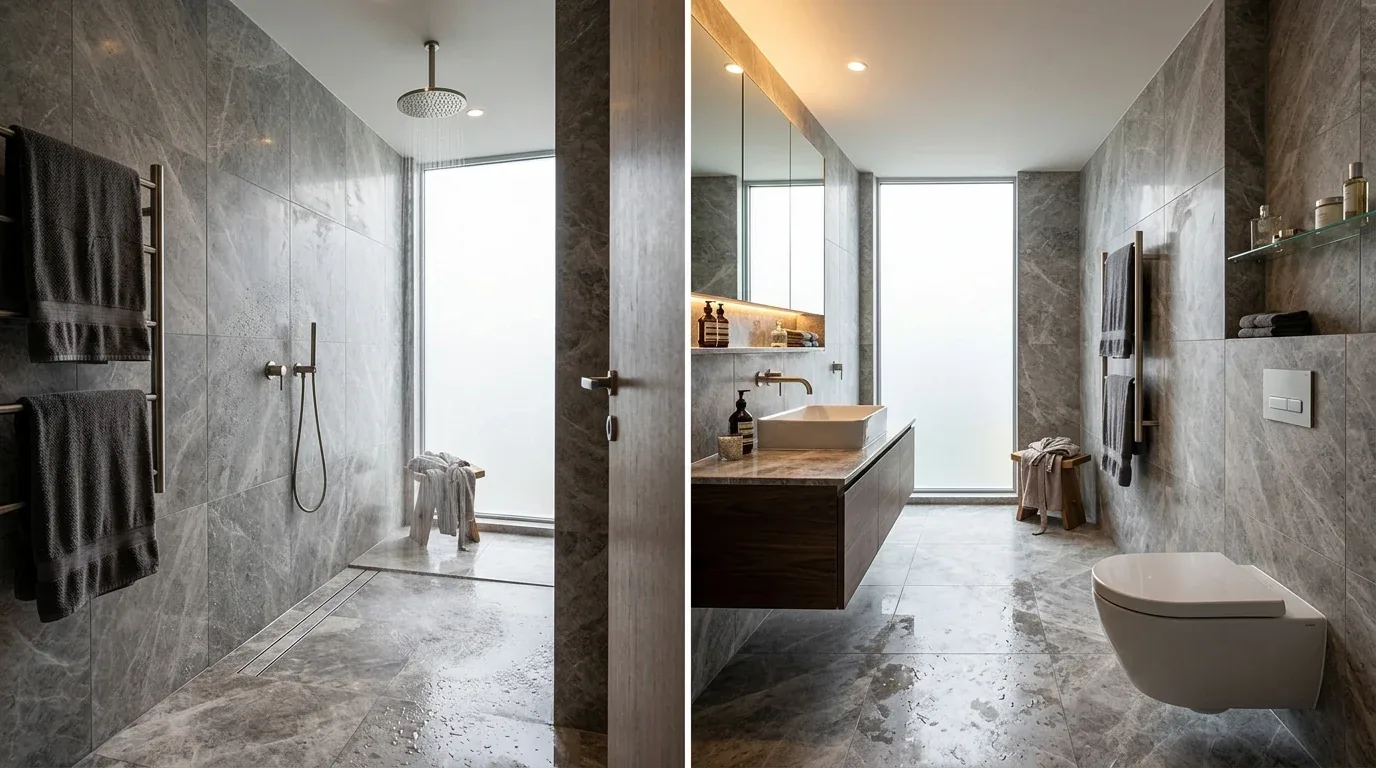
A modern bathroom with gray marble tiles, a walk-in shower, floating vanity, and a wall-mounted toilet.
Why Walnut Creek Homes Benefit from Remote Estate-Scale Renovation Trends
Walnut Creek's architectural landscape features a mix of historic ranch homes and mid-century builds, often with complex layouts and original details. These older properties benefit greatly from the remote management strategies we discuss, as local expertise is combined with digital project oversight to preserve character while upgrading systems and finishes. The Bay Area’s landscape, with its scenic views and mature landscaping, demands a nuanced approach to renovation that respects sightlines and outdoor integration.
Furthermore, Walnut Creek homeowners tend to have high expectations for quality and craftsmanship, which can be ensured through detailed virtual inspections and high-resolution site photos. Our experience shows that using the regional design hub helps clients from Concord to Walnut Creek stay involved, making sure every detail aligns with their vision without frequent trips. The local building codes and permit requirements, such as load-bearing wall inspections and energy compliance, are managed proactively with digital documentation and virtual walkthroughs, streamlining approval processes.
In essence, the combination of sophisticated remote management tools and the area's architectural diversity makes Walnut Creek an ideal setting for estate-scale renovations that are overseen remotely, provided the right strategies and local partnerships are in place.
A modern living room with a large black sectional sofa, two armchairs, a marble fireplace, and a city skyline visible through large windows.
Estimated costs for estate-scale renovations by scope: cosmetic updates, mid-tier, and full structural overhauls
2026 planning ranges by scope, Walnut Creek / Bay Area against Sacramento. They bracket a budget; they are not a quote for a specific house.
Scope
Walnut Creek / Bay Area
Sacramento
Cosmetic whole-home update
$130K-$250K+
$110K-$220K+
Mid-tier renovation with moderate structural work
$250K-$400K
$220K-$350K
Estate-scale project with full structural and design overhaul
This guide's positions on permits are grounded in published building-code, standards, and recognized design-authority sources, alongside Designed | Curated Interiors' verified credentials and active project files: